Research Article | | Peer-Reviewed

Derivation of Worth Growth Rate of an Investor’s Portfolio Under Multi-fractal Analysis

Received: 30 October 2025     Accepted: 13 November 2025     Published: 17 December 2025
Views:       Downloads:
Abstract

The fractal dimension is the basic notion for describing structures that have a scaling symmetry. In finance, multi-fractality is one of the well known facts which characterized non-trivial properties of financial time series. The stock price (or index) fluctuations can be described in terms of long-range temporal correlations by a spectrum of the Holder exponents and a set of fractal dimensions. To forecast the market risk, assessing the stock price indices is the foundation. Multi-fractal has lots of advantages when explaining the volatility of the stock prices. The asset price returns are multi-period market depending on market scenarios which are the measure points. In this work, we use some tools of multi-fractal analysis to derive the worth growth rate of an investor’s portfolio for particular and general cases. For the particular case, we considered the situation when the mean interest rate of some stocks does not depend on other stocks in the market. That is, an investor has invested his money in a stock with a linear mean return. Under the general case, we considered a market comprising some units of assets in long position and a unit of the option in short position. Using Ito’s formula on the present value of the market, we derived the growth rate of investor’s portfolio. Our model equations, which are based on multiplicative processes, capture all the features of the returns. They are tested using data from Zenith Bank of Nigeria stock prices. From our graphs, the worth of investment grows as stock price increases and also decreases with stock price.

Published in American Journal of Applied Mathematics (Volume 13, Issue 6)
DOI 10.11648/j.ajam.20251306.15
Page(s) 428-437
Creative Commons

This is an Open Access article, distributed under the terms of the Creative Commons Attribution 4.0 International License (http://creativecommons.org/licenses/by/4.0/), which permits unrestricted use, distribution and reproduction in any medium or format, provided the original work is properly cited.

Copyright

Copyright © The Author(s), 2025. Published by Science Publishing Group

Keywords

Multi-fractal Spectrum Model, Worth Growth Rate, Investor’s Portfolio, Zenith Bank of Nigeria, Stock Prices

1. Introduction
Financial data has been argued to possess long-term correlation in returns that manifests as volatility clustering, as well as dramatic day-to-day swings that depart notably from normality. Typical signals generated by financial systems are non-trivial structures which can be characterized in terms of the theory of multi-fractals. Interestingly, these structures are to some degree universal in real world, since they come not only from finance but also from diverse fields of science like physics, chemistry or biology. The concept of fractal world was proposed by Mandelbrot in 1980’s and was based on scale-invariant statistics with power law correlations . In subsequent years this new theory was developed and finally it brought a more general concept of multi-scaling. It allows one to study the global and local behavior of the multi-fractal properties of a system. In finance, multi-fractality is one of the well known facts which characterized non-trivial properties of financial time series. The stock price (or index) fluctuations can be described in terms of long-range temporal correlations by a spectrum of the Holder exponents and a set of fractal dimensions.
Assessing the stock price indices is the foundation of forecasting the market risk. Multi-fractal has lots of advantages in explaining the volatility of the stock prices. Multi-fractal analysis has the ability to illuminate the underlying difference between a mono-fractal like Brownian motion and a considerably more diverse construction like the multi-fractal binomial measure. Thus, combining multi-fractal analysis with an agent-based model has the potential to provide insight into the underlying processes and behaviors of a dynamic economic system that is constantly changing and evolving. Multi-fractal processes have been proposed as a new formalism for modeling the time series of returns in finance. The major attraction of these processes is their capability of generating various degrees of long-memory in different powers of returns – a feature that has been found to characterize virtually all financial prices. Furthermore, elementary variants of multi-fractal models are very parsimonious formalizations as they are essentially one-parameter families of stochastic processes. However, the major attraction of multi-fractal processes is their capability of matching elementary properties of the conditional distribution, i.e. long-term dependence in various powers.
Multi-fractality introduces a new source of heterogeneity through time-varying local regularity in the price path. The concept of local Holder exponent describes local regularity. Multi-fractal processes bridge the gap between locally Gaussian (Ito) diffusions and jump-diffusions by allowing a multiplicity of Holder exponents. developed a portfolio model based on mean multifractal detrended cross-correlation analysis (MF-DCCA).
The multi-fractal Model of assets returns (MMAR) is one of the methods of modeling financial prices, . The MMAR is thus an alternative to autoregressive conditionally heteroscedastic (ARCH) and its variants. Multi-fractal processes incorporate long-tailed asset returns and long memory in volatility. Additionally, the MMAR predicts a form of scaling in the moments of returns.
Current finance literature notes a discrepancy between financial theory, which is largely set in continuous time, and empirical research that tends towards discrete formulation ; . This discrepancy is sometimes viewed as a gap to be remedied by improvements in empirical models. Multi-fractality offers a different perspective, showing that a large class of interesting stochastic processes are not covered by the Ito diffusion paradigm. The MMAR contains a restriction, scaling, that generates empirical tests. Scaling describes a specific relationship between data samples of different time scales, e.g. daily, weekly, or monthly returns. Multi-fractal Spectrum Model (MSM) is a stochastic volatility model , with arbitrarily many frequencies. It builds on the convenience of regime–switching models, which were advanced in economics and finance . MSM is closely related to the multi-fractal model of Asset Returns (MMAR) . It improves on the MMAR’s combinatorial construction by randomizing arrival times, guaranteeing a strictly stationary process. Our model provides a pure regime-switching formulation of multi-fractal measures, which were pioneered by Benoit Mandelbrot .
In this work, we present a dynamic stochastic multi-fractal spectrum model (MSM) of variation of the capital market price. We first derive the worth growth rate of an investor’s portfolio for the particular and general cases, then, use the data from stock prices of Zenith Bank, Nigeria to analyze the derived model equations.
2. Basic Tools and Preliminaries
Let Ptt0 denote the price process of a security, in particular of a stock. To allow comparison of investments in different securities, it is necessary to investigate the rates of return defined by
Zt=lnPt-lnPt-1.(1)
As a model for stock prices, the natural candidate is now the multi-fractal process Xtd,nt0 with the stochastic differential equation .
dYt=PYtdt+YtdZtd,n.(2)
The MSM can be specified in both discrete time and continuous time.
2.1. Discrete Time
Let Pt denote the price of a financial asset, and let
zt=lnPt/Pt-1(3)
denote the returns over two consecutive periods. In MSM, returns are specified as
rt=u+σ̅M1tM2tMk̅t1/2ξt,(4)
where u and σ are constants and ξt are independent standard Gaussians. Volatility is driven by the first-order latent Markov state vector:
Mt=M1tM2tMk̅tϵR+k̅.(5)
Given the volatility state, Mt, the next-period multiplier Mk(t+1) is drawn from a fixed distribution , with probability, γk and is otherwise left unchanged. Mkt drawn from distribution, , with probability γk, since the multiplicative measures defined at different stages are drawn from the same distribution. With probability, 1-γk,
Mkt=Mk(t-1)(6)
since γk+1-γk=1 gives the total probability.
The transition probability is specified by
γk=1-1-γ1bk-1.(7)
The sequence γk is approximately geometric with γkγ1bk-1 at low frequency. The marginal distribution M has a unit mean, positive support, and is independent of K. In empirical applications, the distribution, , is often a discrete distribution that can take the values m0 or 2-m0 with equal probability. The return process, rt is then specified by the parameters θ=θm0,u,σ̅,b,γ1.
2.2. Continuous Time
MSM is similarly defined in continuous time. The price process follows the diffusion:
dPtPt=udt+σMtdWt,(8)
where σMt=σ̅M1tMk̅t1/2, Wt is a standard Brownian motion, u and σ̅ are constants. Each component follows the dynamics: Mkt drawn from distribution, M with probability, γkdt. Mk(t+dt)=Mkt with probability 1-γkdt. The intensities vary geometrically with K:γk=γ1bk-1. When the number of components, k̅ goes to infinity, continuous-time MSM converges to a multi-fractal diffusion, whose sample paths take a continuum of local Holder exponents on any finite time interval.
Conditional on the volatility state, the return rt has Gaussian density.
frtMt=mi=12πσ2miexp-rt-u22σ2mi. (9)
Furthermore, Mt=M1t, M2t, ,Mkd is the multiplicative measure defined at different stages. The product of k multiplier is defined by ;
μt=M1tM2tMkt,(10)
with the scaling relationship Eμtq=EMq or
EMq=tτq+1,(11)
where τq= -logbEMq-1 .
If the latest observation Pt of the designated process at time t>d is conditioned on the information;
φt-1=Pu-uu:u=1, 2,,t-1(12)
available up to time t-1, then
Ptφt-1~ut, σ2(Mt)(13)
where (using equation (7)),
 σ2Mt=tτq+1hξt-1, ξt-2,,ξt-d, α(14)
and
ξu=Pu-uu, u=1, 2,,t-1.(15)
The function b(.) with parameters α=αk:k=0, 1,,d is defined as
bξt-1, ξt-2,,ξt-d, α=α0+k=1dαkξt-k2, (16)
so that given the history as in equation (14) of the process up to time t-1, the conditional distribution of Pt is normal with mean ut and variance
 σ2Mt=tτq+1α0+k=1dαkPt-k-ut-k2.(17)
3. The Model
Let a portfolio comprise of one unit of option in short position and b unit of the assets in long position. At time, T the value of the portfolio is
bP-W,(18)
measured by the fractal index CϕE-Wϕ(E)0.
After an elapse of time, t, the value of the portfolio will change by the rate bP+D1t-W in view of the dividend received on b units held. By Ito’s lemma we have
bP-W=buPt+σPz+D1t-Wt+WPuP+122WP2σ2P2t+WPσPz.
Collecting like terms, we have
bP-W=(buP+bD1) -Wt+WPuP+122WP2σ2P2t+(bσP-WPσP)z
If we take
b=WP,(19)
the uncertainty term disappears, thus the portfolio in this case is temporarily riskless. It should therefore grow in value by the riskless rate in force, hence, we have
bP-W=(buP+bD1) -Wt+WPuP+122WP2σ2P2t+WPσP-WPσPz.
That is,
bP-W=(buP+bD1) -Wt+WPuP+122WP2σ2P2t.
Since the portfolio in this case is temporarily riskless, it should therefore grow in value by the riskless rate in force. Also, the change in an instantaneous risk free portfolio should equal the exponential growth of placing money in the bank, we have
(buP+hD1) -Wt+WPuP+122WP2σ2P2t=(bP-W)rt.
Thus
D1WP -Wt+122WP2σ2P2=WPP-Wr
So
 Wt+rP-D1WP+122WP2σ2P2=rW.(20)
Let D1=0 (where D1 is the market price of risk), then the solution of equation (20), which coincides with the solution of
Wt+122WP2σ2P2=0(21)
with
WP,t=0,(22)
W(P,t)P=0 t,(23)
and P2 is assumed constant, is given by
W(P,t)=W0exp-2αtP-2σ2+λPert
with
λ+4αP-3tσ2=0.(24)
Where W is the investment output, r the discount rate, α is the fractal exponent and σ2 the variance of the stock market price.
If we assume P2 to be non-constant, the solution becomes
WP,t=W0e-12σ2α2t+rtAPλ1+BPλ2 (25)
with
Aλ1Pλ1-1+Bλ2Pλ2-1=0.(26)
Where A and B are arbitrary constants.
For D10, the solution of equation (20) is given as:
WP=aqn22PβAeλ1aqn22P+Beλ2aqn22P,(27)
where
λ1=-2z±4z2+8rz2σ2andλ2=±1z4+8rσ2(28)
3.1. The Particular Case
When the mean interest rate of some stocks does not depend on other stocks in the market, we consider the stochastic differential equation (SDE);
dPt=Ptudt+σ(Mt)dVt, P0=ε0.(29)
The most probable path φt associated with this equation satisfies
φt=u-12σ2(Mt)φ, φ0=ε.(30)
Equation (30) means that an investor has invested his money in a stock with a linear mean return ut and volatility σ(Mt) and his real return rate is most likely to be given by
ct=u-12σ2(Mt),(31)
instead of the usual u.
For t>0 and bt=2tloglog1t, the singularity spectrum D(α) defined as the Hausdorff dimension of the set where the fractal exponent is equal to α is given by
limt0supXtdb(t)=1+γ22θ, θ=1, γϵ[0,1].(32)
Using Ito’s Formula on equation (32) leads to the model equation.
-Vt=uPVP+12σ2MtP22VP2-rV,tt0,P0=ε0,(33)
where V=V(Pt,Kt) is the investment worth and Kt is the investment over period t. Let the rate of change of worth, V, with respect to time be given as
VPt,Ktt=S2Pt,Kt-C1Pt,Kt,(34)
where S2 is the production rate, C1, the consumption rate. For a relatively short time, the rate of consumption is very small so that C1Pt,Kt0 as t0. We can then write equation (34) as
Vt=S2Pt,Kt.(35)
Since the rate of change of the worth depends on the investment output at present time, t, we write equation (35) as
dVdt=S2Kt=Pt.
Since the differentiation of V on the right hand side of equation (33) is with respect to P (and not K), we can denote VP, K by VP. Hence, we have equation (33) reduced to an ordinary differential equation of the form.
uPdVdP+12σ2MtP2d2VdP2-rV=-P.
That is,
12σ2MtP2d2VdP2+uPdVdP-rV=-P.(36)
We then solve equation (36) using Euler’s substitution method.
Let P=et, then
lnP=t, anddtdP=1P.
Also
dVdP=dVdtdtdP=1PdVdt,
d2VdP2=ddP1PdVdt=1PddPdVdt+dVdtddP1P,
And d2VdP2=1P2d2Vdt2-dVdt.
Substituting accordingly in equation (36) gives
12σ2Mtd2Vdt2-dVdt+udVdt-rV=-et. (37)
For the homogeneous part, let V=eλt be the solution of equation (37). Therefore
12σ2Mtλ2eλt-12σ2Mtλeλt+uλeλt-reλt=0
Simplifying and collecting like terms, we have
12σ2Mtλ2+u-12σ2Mtλ-r=0(38)
Solving equation (38) which is quadratic in λ gives
λ1=-u-12σ2Mt+u-12σ2Mt2+2σ2Mtrσ2Mt(39)
which is the positive characteristics root of the equation. Our complementary function becomes.
Vc=Aeλ1t. But t=lnP, hence
Vc=Aeλ1lnP=AelnPλ1=APλ1(40)
We now obtain the particular integral using the method of undetermined coefficients using equation (37).
Let VP=Aet, then VP'=Aet and VP''=Aet.
Substituting in equation (37) gives
12σ2MtAet-12σ2MtAet+uAet-rAet=-et.
Simplifying we have
uA-rAet=-et.
Equating coefficient of like terms, we have
uA-rA=-1.
Solving for A in the above equation gives
A=1r-u.
But VP=Aet, substituting the value of A, we have
VP=etr-u.
But t=lnP, hence
VP=elnPr-u=Pr-u.(41)
But the solution of equation (36) is V= Vc+ VP. Hence, from equations (40) and (41), the solution of equation (36) is:
VP=APλ1+Pr-u,(42)
with
Aλ1P̂λ1+P̂r-u=0,(43)
where
λ1=-u-12σ2Mt+u-12σ2Mt2+2σ2Mtrσ2Mt,(44)
is the positive characteristics root of equation (36).
We have assumed here that V(P) is twice differentiable such that
V0=0 anddV(P)dP=0.(45)
Using equations (4), (11), (15) and (17), we have equation (42) as
VP=APλ1+t-τq+1Pα0+k=1dαk+1Pt-k-ut-k2, (46)
with using equation (45)
Aλ1P̂λ1-ut-τq+1σ(P̂u-uu)2=0.(47)
Equation (46) is the worth growth rate of an investor under MSM.
3.2. The General Case
Generally, markets are neither ideal nor complete in the real world. Therefore, equation (33) can hardly be seen as real world behaviour of a stock market price.
Under the following dynamics
dPt=αtPtdt+σMtPtdV(t),
we have the MSM version of the parabolic partial differential equation with D1=0 as;
-VP,tt=rPVP,tP+12σ2MtP22VP,tP2-rV(P,t),
(P,t)(0,)×(0,T),(48)
where αt=lnPt+t-Ptt is the rate of stock price changes at time t.
To remove the effect of r from equation (48), we let r=0, and set
V̅=e-rtV(49)
and
P̅=e-rtP,(50)
so that equation (48) becomes;
-V̅P̅,tt=(0)P̅V̅P̅,tP̅+12σ2MtP̅22V̅P̅,tP̅2-0V̅P̅,t.
-V̅P̅,tt=12σ2MtP̅22V̅P̅,tP̅2,
where VP,t is the investment output, r the linear discount rate and P the stock prices.
Hence, we have
12σ2MtP̅22V̅P̅,tP̅2+V̅P̅,tt=0. (51)
From equation (21) with σ2=σ2(Mt), we have a special solution of the form:
V̅=V̅0exp-2αtP̅-2σ2Mt+λP̅.(52)
Using equations (4), (14) and (15) into equation (52), we have
V̅P̅,t=V̅0exp-2lnPt+t-PttP̅-2+u-12σ2Mt2+2σ2Mtrtτq+1α0+k=1dαkξt-k2.(53)
Furthermore,
V̅P̅,tP̅=0, t,(54)
with
u-12σ2Mt+u-12σ2Mt2+2σ2Mtr+ 4lnPt+t-PttP̅3tτq+1hξt-1, ξt-2,,ξt-d, αP̂u-uu=0.(55)
Again, solving for P̅ in equation (55) gives (using equation (53) and if λ is as in equation (44));
P̅=4lnPt-Pt+tt-τqu-12σ2Mt+u-12σ2Mt2+2σ2Mtrα0+k=1dαkξt-k213.(56)
Substituting equation (56) in equation (50) using equations (4) and (44) gives
P=4lnPt-Pt+tt-τqλα0+k=1dαkξt-k213eu+σ(mtξt
=4lnPt-Pt+tt-τqλα0+k=1dαkξt-k213expu+t-τq+1α0+k=1dαkξt-kPt-ut,
(using equations (4), (14) and (15)). We therefore have the future price as
Pt=4lnPt-Pt+tt-τqλα0+k=1dαkξt-k213expu+t-τq+1α0+k=0dαk+1Pt-ut2).(57)
In general, we have the growth rate of the investor’s portfolio as (using equations (49) and (53))
V=V̅0exp-2lnPt+t-PttP̅-2+u-12σ2Mt2+2σ2Mtrtτq+1α0+k=1dαkξt-k2expu+σ̅M1tM2tMk̅t12ξtt(58)
4. Testing Our Model Equations
Our model equations, worth growth rate of investor’s portfolio for the particular case, equation (46) and worth growth rate of investor’s portfolio for the general case, equation (53) are tested using data from Zenith Bank of Nigeria stock prices. The data below in Table 1 are stock prices of Zenith Bank, Nigeria between January and August.
Table 1. Stock of Zenith bank Nigeria.

S/No

Stock Price

Volume

Value (₦)

1

14.30

5979214

84469072.19

2

13.69

21971420

297229102.30

3

11.08

21263057

234828711.10

4

10.98

12262680

133454007.40

5

12.97

19737082

255511920.50

6

13.60

56728977

770381004.30

7

15.60

4308491

67613293.42

8

16.71

15512358

259157916.10

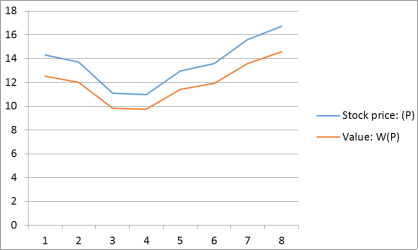
Table 2. Worth growth rate for the particular case.Worth growth rate for the particular case.Worth growth rate for the particular case.

Stock price: (P)

Value: V (P)

14.3

12.52

13.69

12.01

11.08

9.82

10.98

9.74

12.97

11.41

13.6

11.94

15.6

13.6

16.71

14.56

Figure 1. Our worth growth rate for the particular case.
From Figure 1, the worth of investment grows as stock price increases and also decreases with stock price. In other words, the worth and the stock price move in the same direction.
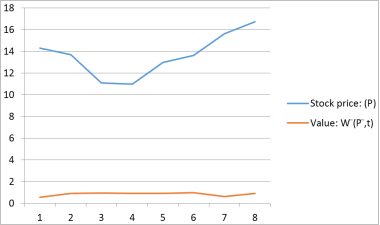
Table 3. Worth growth rate for the general case.Worth growth rate for the general case.Worth growth rate for the general case.

Stock price: (P̅)

Value: V̅P̅,t

14.3

0.55

13.69

0.917

11.08

0.939

10.98

0.902

12.97

0.931

13.6

0.976

15.6

0.64

16.71

0.9

Figure 2. Our worth growth rate for the general case.
Figure 2 shows that the worth of investment increases as stock price increases but not in the same direction.
5. Conclusion
This work used some tools of multi-fractal analysis to derive the worth growth rate of an investor’s portfolio for particular and general cases. Multi-fractal analysis allows one to predict, as well as possible, the future volatility of an asset over a certain time horizon, or even better, to predict that probability distribution of all possible price paths between now and a certain future date. It also provides a well-defined procedure to filter the series of past price changes, and to compute the weights of the different future paths.
Figure 1 shows that the worth of investment grows as stock price increases and also decreases with stock price. This means that the worth and the stock price move in the same direction. On the other hand, Figure 2 shows that the worth of investment increases as stock price increases but not in the same direction. Our model equations, which were based on multiplicative processes, captured all the features of the returns, hence, from our graphs the worth of investment grows as stock price increases and also decreases with stock price. For the particular cases, the worth and stock price move at the same rate but for the general case, the worth picks up gradually as stock price increases. Hence, our models can be used in the measurement of random behaviour of equity returns.
Multi-fractal spectrum model captures a multitude of important features of data. These include long memory in volatility, long tails, scaling, and high variability in returns at high frequencies.
Abbreviations

ARCH

AutoRegressive Conditionally Heteroscedastic

MF-DCCA

Multi-Fractal Detrended Cross-Correlation Analysis

MMAR

Multi-Fractal Model of Assets Returns

MSM

Multi-fractal Spectrum Model

SDE

Stochastic Differential Equation

Author Contributions
Joy Ijeoma Adindu-Dick is the sole author. The author read and approved the final manuscript.
Conflicts of Interest
The authors declare no conflicts of interest.
References
[1] Mandelbrot, B. B., (1982). The fractal geometry of nature. New York: Freeman.
[2] Jia, L., Xu, W., Linliu, Z., & Qianying, F. (2021). Research on the Portfolio Model based on Mean-MF-DCCA under Multifractal Fea-ture Constraint. Journal of Computational and Applied Mathematics, 386, 113264.
[3] Calvet, L., Fisher, A., & Mandelbrot, B. B. (1997). A multifractal model of asset returns. Working Paper: Yale University.
[4] Mandelbrot, B. B., (1997). Fractals and scaling in finance: Discon-tinuity, Concentration, Risk New York: Springer-Verlag.
[5] Mandelbrot, B. B., Fisher, A., & Calvet, L., (1997). A multifractal model of asset returns. Discussion Paper, Cowles Foundation Yale University. 1164-1166.
[6] Melino, A., (1994). Estimation of continuous-time models in finance, in advances in econometrics: Sixth World Congress. Cambridge. Cambridge University Press.
[7] Drost, F. C., & Werker, B. J. (1996). Closing the GARCH gap: Con-tinuos time GARCH modeling. Journal of Econometrics, 74, 59-84.
[8] Rossi, P. E., (1997). Modeling stock market volatility: Bridging the gap to continuous time. New York: Academic Press.
[9] Wiggins, J. B., (1987). Option values under stochastic volatility: Theory and empirical estimates. Journal of Financial Economics, 19 (2), 351-372.
[10] Taylor, S. J., & Steven, (2008). Modeling financial time series (2nd ed.). New Jersey: World Scientist.
[11] Hamilton, J. D., (2008). Regime-Switching models: New Palgrave Dictionary of Economics (2nd ed.). Palgrave: McMillan Ltd.
[12] Mandelbrot, B. B., (1983). The fractal geometry of nature (Updated and augm. ed.). New York: Freeman.
[13] Mandelbrot, B. B., (2006). Intermittent turbulence in self-similar cascades: Divergence of high moments and dimension of the carrier. Journal of Fluid Mechanics, 62 (2), 331-358.
[14] Mandelbrot, B. B., & Berger, J. M., (1999). Multifractals and 1/f noise: wild self-affinity in physics (1963-1976). (Repr. ed.). New York, NY [u. a.]: Springer.
[15] Eberlein, E., & Keller, U. (1995). Hyperbolic distributions in finance. Bernoulli, 1(3), 281-299.
[16] Calvet, L. E., & Fisher, A. J. (2004). How to forecast long-run vola-tility: Regime switching and the estimation of multifractal processes. Journal of Financial Econometrics, 2, 49-83.
[17] Calvet, L. E., & Fisher, A. J. (1996). Multifractality in assets returns: Theory and evidence. Working paper: Yale University.
[18] Osu, B. O. & Adindu-Dick J. I. (2014). Optimal prediction of the expected value of assets under fractal scaling exponent. Applied Mathematics and Sciences: An International Journal (MathSJ.), Vol. 1, No 3, 41-51.
Cite This Article
  • APA Style

    Adindu-Dick, J. I. (2025). Derivation of Worth Growth Rate of an Investor’s Portfolio Under Multi-fractal Analysis. American Journal of Applied Mathematics, 13(6), 428-437. https://doi.org/10.11648/j.ajam.20251306.15

    Copy | Download

    ACS Style

    Adindu-Dick, J. I. Derivation of Worth Growth Rate of an Investor’s Portfolio Under Multi-fractal Analysis. Am. J. Appl. Math. 2025, 13(6), 428-437. doi: 10.11648/j.ajam.20251306.15

    Copy | Download

    AMA Style

    Adindu-Dick JI. Derivation of Worth Growth Rate of an Investor’s Portfolio Under Multi-fractal Analysis. Am J Appl Math. 2025;13(6):428-437. doi: 10.11648/j.ajam.20251306.15

    Copy | Download

  • @article{10.11648/j.ajam.20251306.15,
      author = {Joy Ijeoma Adindu-Dick},
      title = {Derivation of Worth Growth Rate of an Investor’s Portfolio Under Multi-fractal Analysis},
      journal = {American Journal of Applied Mathematics},
      volume = {13},
      number = {6},
      pages = {428-437},
      doi = {10.11648/j.ajam.20251306.15},
      url = {https://doi.org/10.11648/j.ajam.20251306.15},
      eprint = {https://article.sciencepublishinggroup.com/pdf/10.11648.j.ajam.20251306.15},
      abstract = {The fractal dimension is the basic notion for describing structures that have a scaling symmetry. In finance, multi-fractality is one of the well known facts which characterized non-trivial properties of financial time series. The stock price (or index) fluctuations can be described in terms of long-range temporal correlations by a spectrum of the Holder exponents and a set of fractal dimensions. To forecast the market risk, assessing the stock price indices is the foundation. Multi-fractal has lots of advantages when explaining the volatility of the stock prices. The asset price returns are multi-period market depending on market scenarios which are the measure points. In this work, we use some tools of multi-fractal analysis to derive the worth growth rate of an investor’s portfolio for particular and general cases. For the particular case, we considered the situation when the mean interest rate of some stocks does not depend on other stocks in the market. That is, an investor has invested his money in a stock with a linear mean return. Under the general case, we considered a market comprising some units of assets in long position and a unit of the option in short position. Using Ito’s formula on the present value of the market, we derived the growth rate of investor’s portfolio. Our model equations, which are based on multiplicative processes, capture all the features of the returns. They are tested using data from Zenith Bank of Nigeria stock prices. From our graphs, the worth of investment grows as stock price increases and also decreases with stock price.},
     year = {2025}
    }
    

    Copy | Download

  • TY  - JOUR
    T1  - Derivation of Worth Growth Rate of an Investor’s Portfolio Under Multi-fractal Analysis
    AU  - Joy Ijeoma Adindu-Dick
    Y1  - 2025/12/17
    PY  - 2025
    N1  - https://doi.org/10.11648/j.ajam.20251306.15
    DO  - 10.11648/j.ajam.20251306.15
    T2  - American Journal of Applied Mathematics
    JF  - American Journal of Applied Mathematics
    JO  - American Journal of Applied Mathematics
    SP  - 428
    EP  - 437
    PB  - Science Publishing Group
    SN  - 2330-006X
    UR  - https://doi.org/10.11648/j.ajam.20251306.15
    AB  - The fractal dimension is the basic notion for describing structures that have a scaling symmetry. In finance, multi-fractality is one of the well known facts which characterized non-trivial properties of financial time series. The stock price (or index) fluctuations can be described in terms of long-range temporal correlations by a spectrum of the Holder exponents and a set of fractal dimensions. To forecast the market risk, assessing the stock price indices is the foundation. Multi-fractal has lots of advantages when explaining the volatility of the stock prices. The asset price returns are multi-period market depending on market scenarios which are the measure points. In this work, we use some tools of multi-fractal analysis to derive the worth growth rate of an investor’s portfolio for particular and general cases. For the particular case, we considered the situation when the mean interest rate of some stocks does not depend on other stocks in the market. That is, an investor has invested his money in a stock with a linear mean return. Under the general case, we considered a market comprising some units of assets in long position and a unit of the option in short position. Using Ito’s formula on the present value of the market, we derived the growth rate of investor’s portfolio. Our model equations, which are based on multiplicative processes, capture all the features of the returns. They are tested using data from Zenith Bank of Nigeria stock prices. From our graphs, the worth of investment grows as stock price increases and also decreases with stock price.
    VL  - 13
    IS  - 6
    ER  - 

    Copy | Download

Author Information